Alibaba vs AliExpress (2026): What’s the Difference & Which to Use?
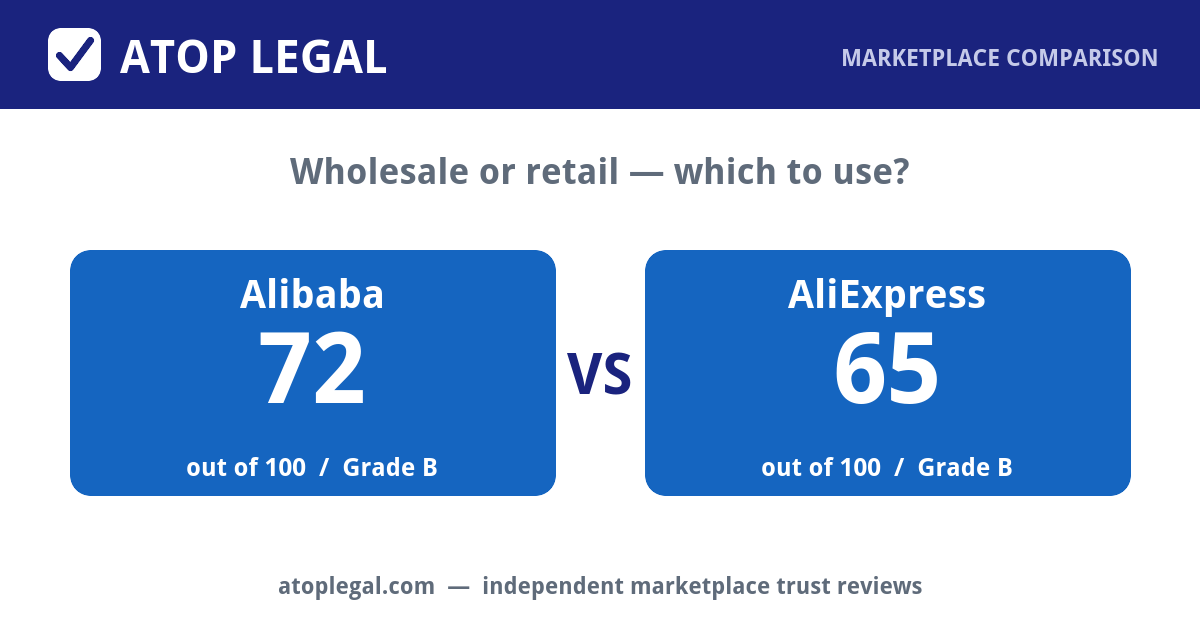
Alibaba vs AliExpress, in one line: same parent company (Alibaba Group), two different jobs — Alibaba 72/100 is for B2B wholesale, AliExpress 65/100 is for B2C retail (both Grade B). Choose Alibaba for bulk sourcing with Trade Assurance and supplier negotiation; choose AliExpress for single-unit, retail-quantity shopping with Buyer Protection.
Disclosure: This comparison contains affiliate links to both platforms. We may earn a commission at no extra cost to you. This never affects our Trust Scores or which platform we recommend. Learn more.
Quick Verdict: Alibaba vs AliExpress
Alibaba and AliExpress are both owned by Alibaba Group, so this isn’t really a head-to-head rivalry — it’s about which model fits your needs. Alibaba.com (72/100, Grade B) is a B2B wholesale platform built for businesses and bulk buyers: minimum order quantities, supplier negotiation, sampling and Trade Assurance that covers product quality and shipping. AliExpress (65/100, Grade B) is the B2C retail side: buy single units at fixed prices, with Buyer Protection and the faster, verified Choice tier. If you’re sourcing inventory or buying in bulk, use Alibaba; if you’re shopping for yourself in normal quantities, use AliExpress.
Alibaba vs AliExpress: Trust Scores Compared
| Alibaba | AliExpress | |
|---|---|---|
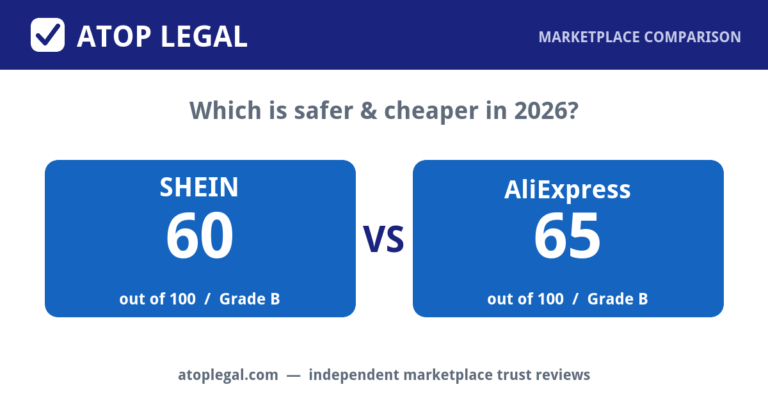
| Atop Legal Trust Score | 72/100 (B) | 65/100 (B) |
| Model | B2B wholesale | B2C retail |
| Owner | Alibaba Group (NYSE: BABA) | Alibaba Group (NYSE: BABA) |
| Order size | Bulk; MOQs apply | Single units |
| Buyer protection | Trade Assurance (quality + shipping) | Buyer Protection (full refund) |
| Best for | Business sourcing, resellers | Personal budget shopping |
Alibaba scores higher overall — its Trade Assurance and supplier verification lift its marketplace and data dimensions — while AliExpress edges infrastructure and business signals:
| Dimension | Alibaba | AliExpress | Edge |
|---|---|---|---|
| Infrastructure & Security | 15/20 | 16/20 | AliExpress |
| Business Legitimacy | 16/20 | 17/20 | AliExpress |
| User Feedback | 13/20 | 12/20 | Alibaba |
| Data Protection | 13/20 | 10/20 | Alibaba |
| Marketplace Factors | 15/20 | 10/20 | Alibaba |
| Total | 72/100 (B) | 65/100 (B) | Alibaba |
Where Alibaba Wins
- Wholesale & Trade Assurance. Built for bulk, with escrow-style protection covering product quality and on-time shipping.
- Supplier verification. Verified and Gold Supplier tiers help you vet manufacturers.
- Negotiation & sampling. Request quotes, negotiate prices and order samples before committing.
Where AliExpress Wins
- Retail convenience. Buy single units at fixed prices — no minimums or negotiation needed.
- Consumer protection. Buyer Protection with full refunds and the faster, verified Choice tier.
- Slightly stronger platform signals. A touch higher on infrastructure and business legitimacy.
Sourcing Safely on Alibaba
Because Alibaba is B2B, the risks are different: supplier quality varies widely, so vet manufacturers using their verification tier, transaction history and reviews, always pay through Trade Assurance (never off-platform), and order samples before a bulk run. On AliExpress, the consumer rules apply — check seller ratings, prefer Choice listings, and use Buyer Protection. Both are legitimate Alibaba Group platforms; the key is matching the platform to whether you’re buying wholesale or retail.
Which Should You Choose?
Choose Alibaba if you’re a business or reseller sourcing inventory in bulk and want supplier negotiation, sampling and Trade Assurance.
Choose AliExpress if you’re shopping for yourself in normal quantities and want fixed prices, Buyer Protection and faster Choice shipping.
For more budget options, see our AliExpress vs DHgate and Temu vs AliExpress comparisons.
How We Compared Alibaba and AliExpress
This comparison draws on our two independent Trust Score reviews, not a paid placement. Each platform is assessed across five dimensions using verifiable public evidence and each platform’s published buyer-protection policies. Affiliate links never influence the scores. For full detail, see our Alibaba review, our AliExpress review and our Trust Score methodology.
Frequently Asked Questions
What’s the difference between Alibaba and AliExpress?
Both are owned by Alibaba Group. Alibaba.com is a B2B wholesale platform for bulk orders with minimum quantities, supplier negotiation and Trade Assurance; AliExpress is a B2C retail site where you buy single units at fixed prices with Buyer Protection.
Is Alibaba or AliExpress safer?
Both are Grade B and legitimate. Alibaba scores slightly higher overall (72 vs 65), helped by Trade Assurance and supplier verification; AliExpress is safer for consumers thanks to its straightforward Buyer Protection. Match the platform to bulk vs retail.
Can individuals buy on Alibaba?
Yes, but it’s built for businesses — many listings carry minimum order quantities and expect negotiation. For single-item personal purchases, AliExpress is the better fit.
Is Alibaba cheaper than AliExpress?
Per unit, Alibaba is usually cheaper at wholesale volumes, but you must meet minimum order quantities. For small or single purchases, AliExpress is more practical and often cheaper once minimums are factored in.
Bottom line: Alibaba (72) and AliExpress (65) are siblings for different jobs — Alibaba for bulk/business sourcing, AliExpress for personal retail. Read our Alibaba review and AliExpress review, or the full Best Online Marketplaces 2026 ranking.